- Civil
- Project/Department Highlights
Aug 19, 2026
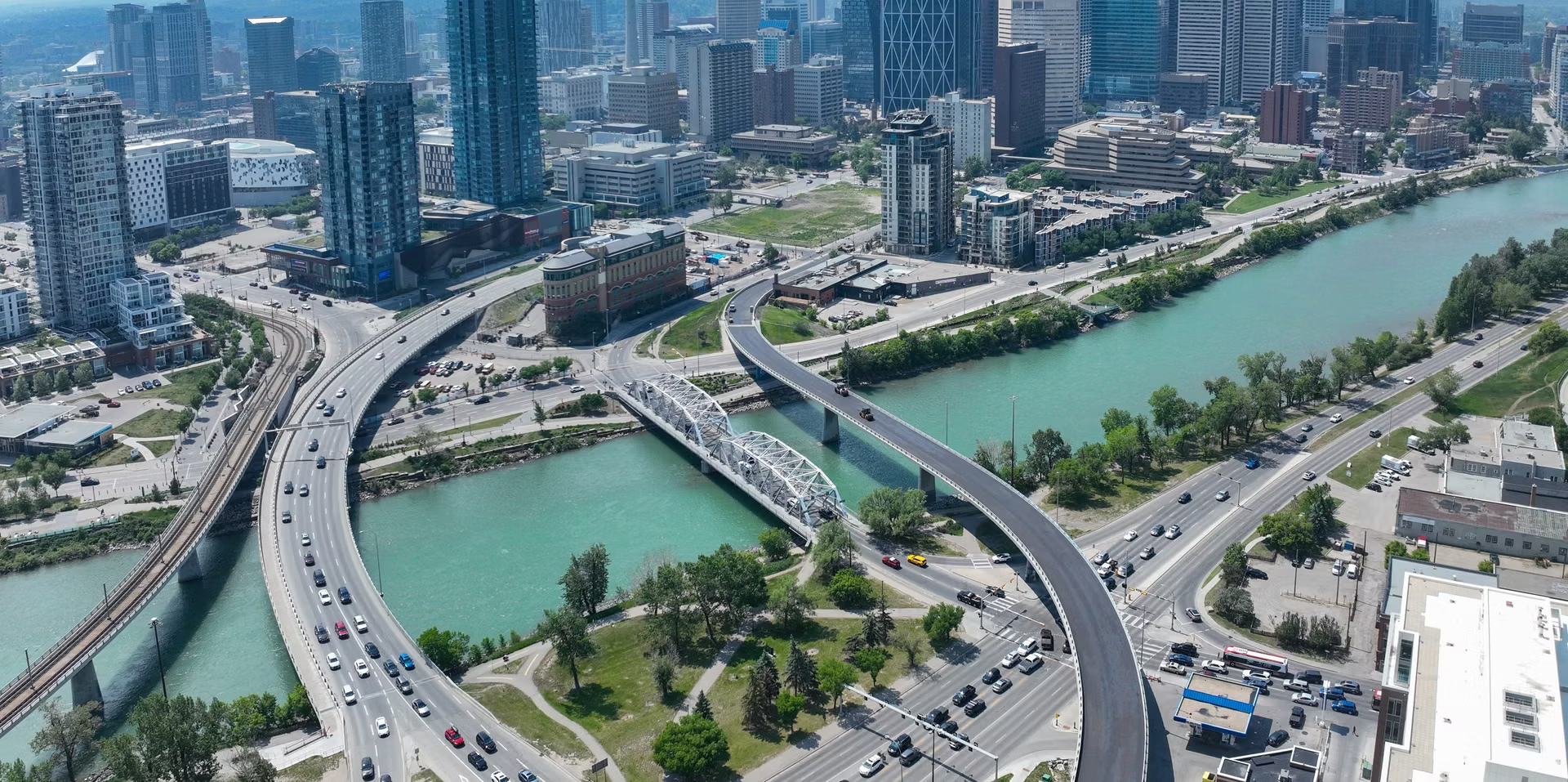
For more than four decades, the 4th Avenue Flyover Bridge has been one of Calgary's most important transportation links. Stretching 930 metres across the Bow River, it serves as a major gateway into the city's downtown, carrying thousands of commuters, visitors, and businesses every day.
Originally built in 1982, the structure had reached a point where significant repairs were needed to ensure it could continue serving the city safely and reliably for years to come. Rather than replacing the bridge entirely, a costly and disruptive undertaking, the City of Calgary chose to rehabilitate.
As Prime Contractor, EllisDon Civil led the rehabilitation of this critical piece of infrastructure, self-performing major portions of the work including concrete restoration, traffic management, and structural repairs. The result was a revitalized bridge delivered three months ahead of schedule, with innovative engineering solutions that kept Calgary moving throughout construction.
Rehabilitating a bridge of this size is challenging under any circumstance. Doing so while maintaining access to Calgary's downtown core adds another layer of complexity. The project involved restoring key structural elements that had experienced decades of wear and tear, including bridge surfaces, barriers, expansion joints, concrete components, and roadway transitions. Every repair needed to be carefully planned and sequenced to preserve safety while allowing the bridge to remain operational.
The goal was simple: renew the bridge's performance and extend its service life without disrupting the people who depend on it every day.
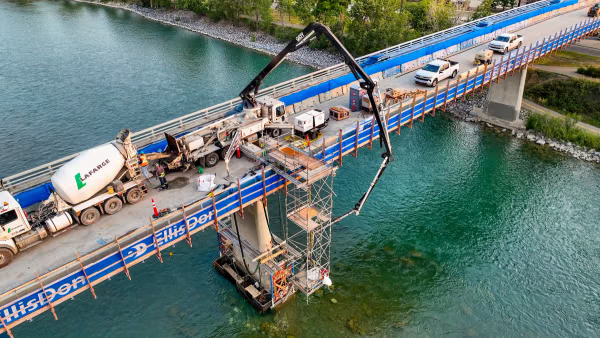
While much of the work happened in plain sight, the project's most complex challenge was hidden below the waterline.
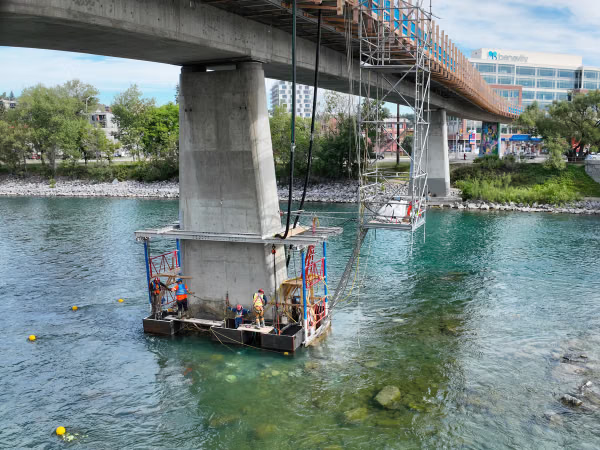
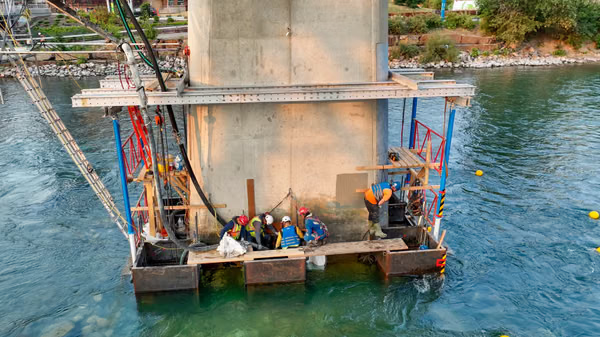
At the centre of the Bow River stands one of the bridge's primary support piers. Decades of exposure to water required rehabilitation work in an environment that presented significant obstacles, including river currents, limited visibility, environmental restrictions, and difficult access for crews.
Rather than relying on conventional methods, the EllisDon Civil team developed a custom solution.
Working alongside commercial divers, the team installed a specially engineered steel dry box around the submerged portion of the pier. The enclosure effectively transformed part of the river into a dry work area, allowing crews to safely access and repair the structure below the waterline.
The operation required careful coordination between divers, engineers, and construction crews, combining underwater construction expertise with structural rehabilitation techniques. What would normally be an inaccessible underwater repair became a controlled environment where critical restoration work could be completed safely and efficiently.
It's not every day that bridge rehabilitation requires commercial divers, but this innovative approach proved essential to preserving one of Calgary's most important transportation assets.
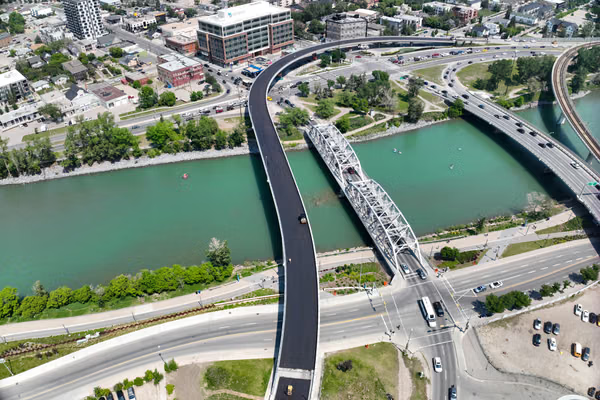
The bridge's importance to Calgary meant construction couldn't come at the expense of mobility.
Throughout the project, EllisDon Civil managed more than 30 traffic configurations to maintain access for commuters, businesses, and pedestrians. The team also coordinated construction activities around two Calgary Stampede events, one of the city's busiest periods, when more than a million visitors descend on the city.
A carefully staged construction approach allowed traffic to continue flowing throughout rehabilitation. During peak Stampede periods, an additional lane was temporarily opened to help accommodate increased demand, while pedestrian routes remained accessible for the duration of the project.
The successful completion of the 4th Avenue Flyover Bridge rehabilitation demonstrates what is possible when engineering innovation, construction expertise, and thoughtful planning come together.
From repairing structural elements beneath the Bow River to maintaining traffic on one of Calgary's busiest routes, the project required creative problem-solving at every stage. The result is infrastructure that will continue serving Calgary residents, businesses, and visitors for years to come—delivered safely, efficiently, and three months ahead of schedule.
Latest Insights
Aug 19, 2026
Jul 14, 2026
Jun 1, 2026
Whether you’re exploring partnership or seeking guidance on a development, we’re ready to help you move forward with confidence.
Contact Us