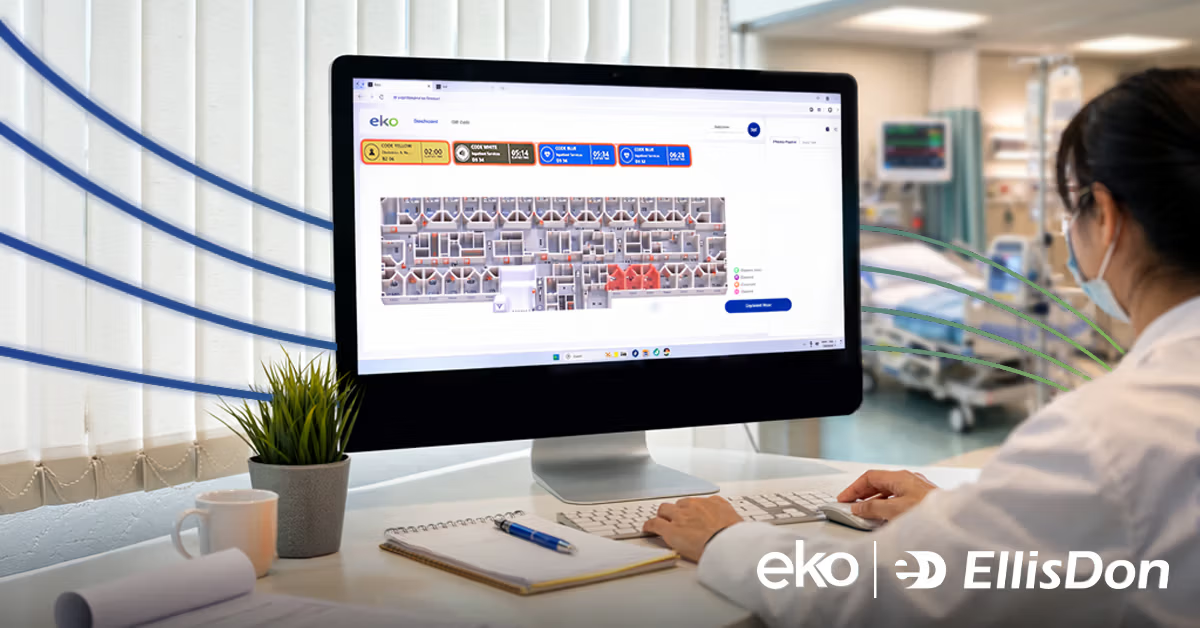
Picture a nurse moving through a busy hospital corridor. A call comes in from a patient room. In that split second, the difference between hoping someone saw the alert and knowing help is already on the way can change everything.
At West Lincoln Memorial Hospital, Ontario’s first all private‑room hospital, every element was designed to serve its community for decades to come. While the building itself sets a new standard for patient comfort, what truly transforms the experience is something you can’t see in the walls.
It’s the digital layer working quietly in the background—helping teams respond faster, work smarter, and feel supported moment to moment.
That layer is EKO.
What Is EKO?
EKO is a digital framework developed by EllisDon’s Energy & Digital Services team. It acts as the connective tissue of a healthcare facility; bringing together clinical systems, building systems, and security infrastructure so they can communicate, share data, and trigger the right actions at the right time.
In practice, EKO integrates platforms such as Active Directory, HL7, Epic Rover, nurse call, real‑time location services (RTLS), security systems, and lighting controls into a single, unified environment. The result is a streamlined digital experience that supports clinicians in doing what they do best: efficiently, safely, and with confidence.
The goal is simple: improve clinical workflows, respond faster, support safer operations, and strengthen the patient experience.
Why It Matters in Healthcare
Traditionally, healthcare facilities manage “clinical integration” and “building integration” as separate efforts. EKO changes that by bringing both worlds together through a unified approach.
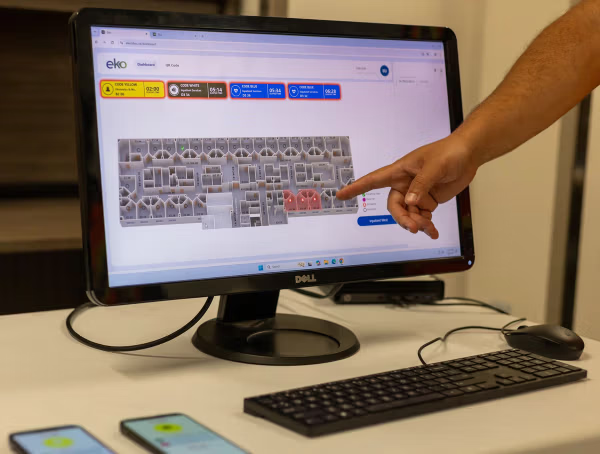
By enabling systems to speak the same language, EKO gives teams real‑time visibility into what’s happening across the hospital. Less time is spent tracking down information or navigating disconnected tools, and more time is spent focused on patient care.
Workflows That Make the Impact Real
One of the clearest examples of EKO in action is emergency escalation.
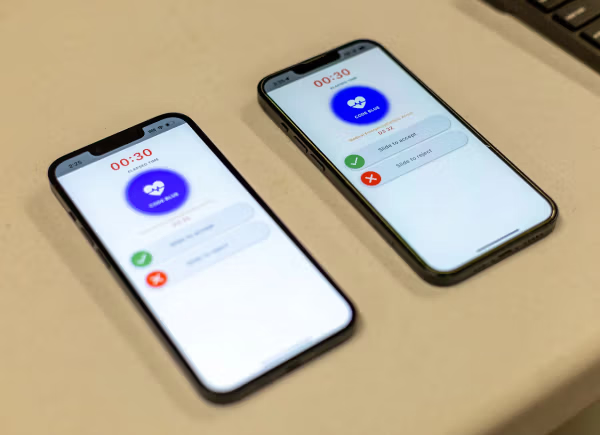
When a Patient Call is triggered, EKO immediately notifies the appropriate clinical team on their mobile devices. If no one responds within a defined window, the alert automatically escalates to the next team, continuing until someone accepts and help is on the way.
“For patients, EKO means faster responses and safer care. Patient requests, such as pain relief or assistance, are sent directly to care teams’ handheld devices, reducing wait times and improving responsiveness,” said Chelsea Rodriguez, Clinical Leader, Emergency Department and Diagnostic Imaging, West Lincoln Memorial Hospital. “In emergencies, EKO immediately alerts responders so they can reach the patient sooner, even before an overhead announcement. By improving coordination and saving critical time, EKO helps ensure patients receive timely, reassuring care when it matters most.”
Beyond notifications, EKO can also coordinate the physical environment, automatically turning on lights, unlocking doors, and enabling elevator access to help response teams move quickly through the building when every second counts.
Supporting Adoption on the Front Lines
As with any new digital tool, change management was critical, particularly on the clinical side. Shifting from manual processes to digital workflows can initially feel like “one more thing” in an already demanding environment.
To support adoption, clinicians were able to practice with EKO ahead of go‑live, building familiarity and confidence before the system was fully deployed.
One standout moment came during the rollout of nurse call notifications. The feature was briefly turned off to limit change during go‑live, but clinicians quickly asked for it to be reinstated. They could immediately feel how it supported their work rather than slowing it down.
“From an IT perspective, EKO makes it easier for our clinical teams to get the information they need, right when they need it,” said Amber Ruttan, Project Manager, Health Information Technology Services, West Lincoln Memorial Hospital. “By sending alerts from our primary systems such as nurse call and real time location services (RTLS) directly into our electronic medical record (EMR), staff can receive these notifications on their mobile devices without having to monitor multiple systems. This helps ensure that important patient requests and safety alerts reach the right people quickly.”
EKO’s usability played a key role in this success: offering closed‑loop communication for peace of mind, minimizing steps to complete tasks, and creating a true “one‑app” experience by integrating the EKO mobile app directly into Epic Rover.
What Comes Next
The work at West Lincoln Memorial Hospital represents more than a successful deployment; it sets the foundation for how digital infrastructure can support healthcare environments moving forward.
With EKO now proven in a live hospital setting, the focus shifts to scaling and refinement. The integrations, workflows, and templates developed through this project create a repeatable model that can be adapted to other healthcare facilities, tailored to different building designs, clinical needs, and operational priorities.
Most importantly, EKO continues to evolve through a human‑centred lens. As hospitals face increasing complexity, the ability to use the same data to support different roles (clinicians, IT teams, facilities, and security) will be critical. EKO’s flexible framework makes it possible to layer new capabilities over time, responding to how people actually work rather than forcing them to adapt to rigid systems.
At its core, this approach reflects a broader shift in healthcare delivery: buildings that don’t just house care but actively support it, quietly, intelligently, and in real time. West Lincoln Memorial Hospital offers a glimpse of what’s possible when digital systems are designed to work together, and when technology is used not as an add‑on, but as an integral part of the care environment.
Latest News

- Community Initiatives
- News
Sep 25, 2026
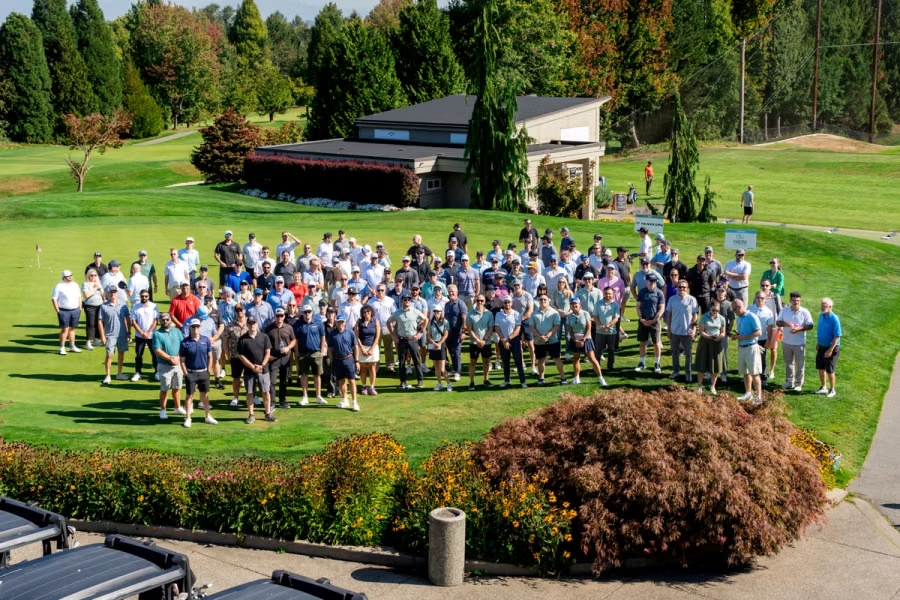
EllisDon Teams Raise More Than $1.4 Million for Communities Across Canada


Whether you’re exploring partnership or seeking guidance on a development, we’re ready to help you move forward with confidence.
Contact Us