
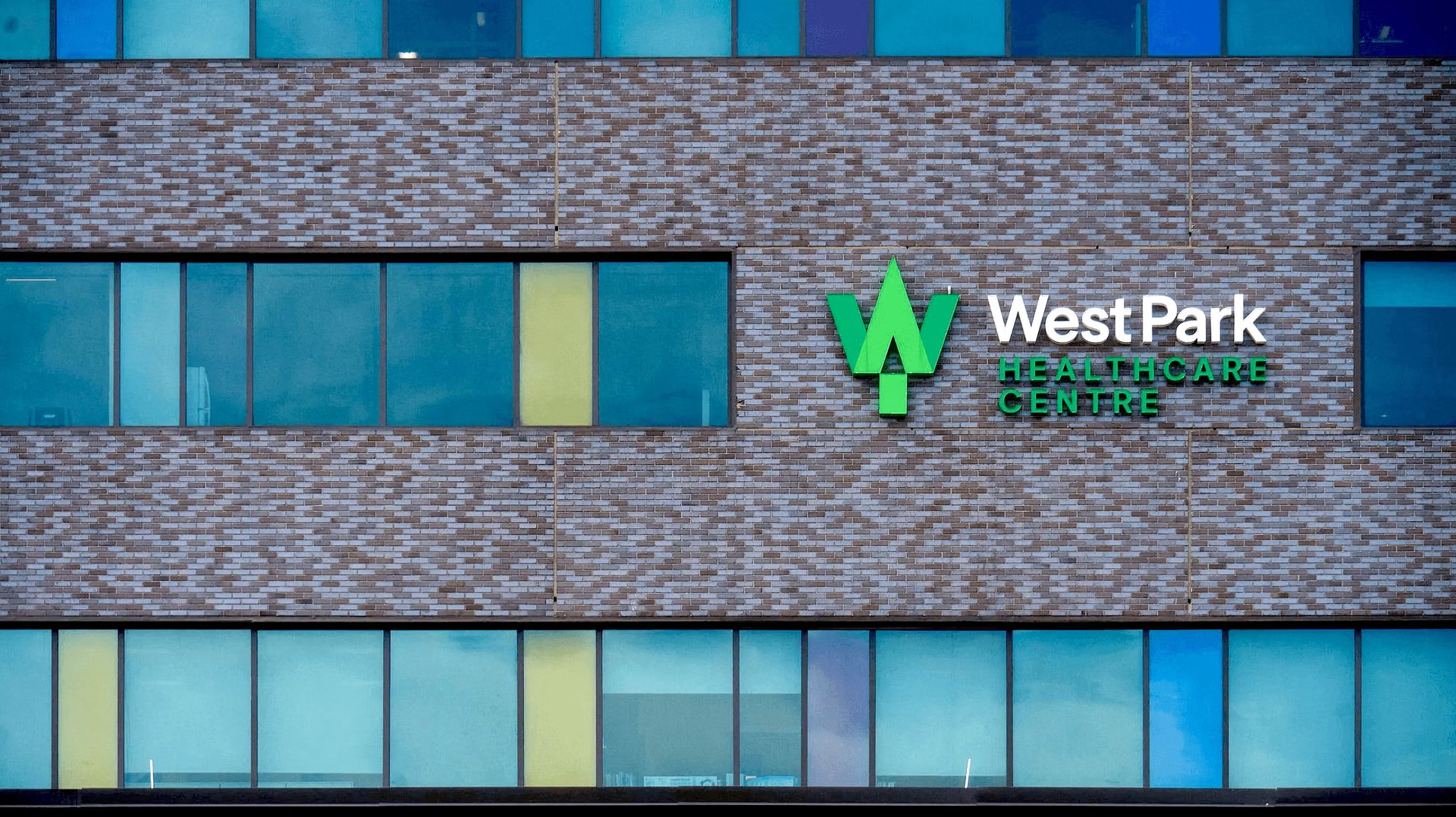
How an Integrated Lifecycle Approach Improved Long Term Healthcare Infrastructure Performance at UHN's West Park Healthcare Centre
How We Delivered Results
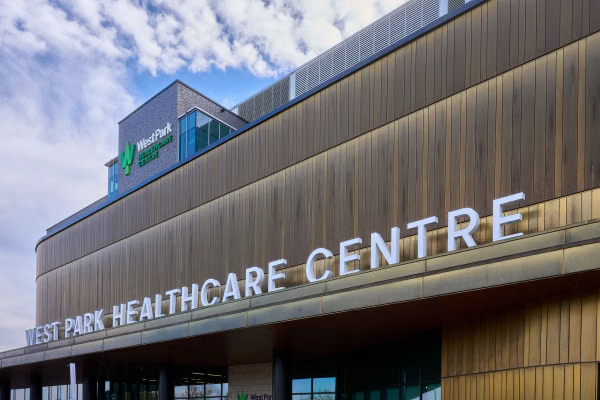
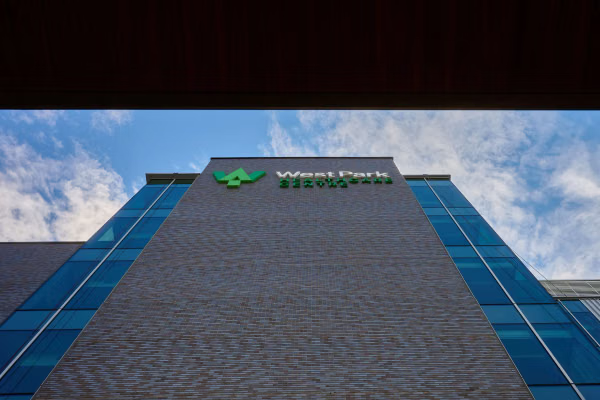
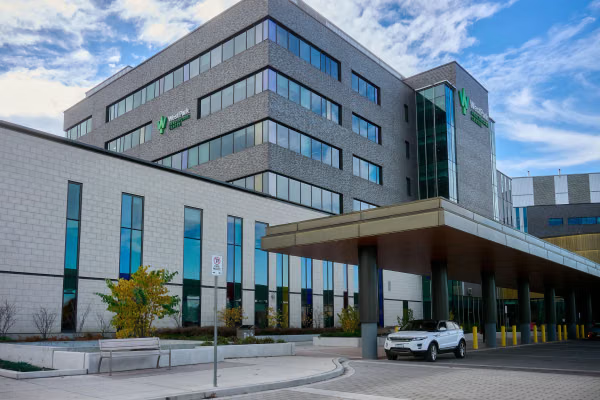
UHN’s West Park Healthcare Centre (WPHC) in Toronto represents a new model for healthcare infrastructure delivery, where facility operations, digital systems, furniture & equipment, and sustainability are integrated from day one rather than managed as separate functions. Delivered through a 30-year Design-Build-Finance-Maintain (DBFM) partnership, the six-storey, 760,000-square-foot healthcare campus provides 316 patient beds and specialized rehabilitation and complex continuing care services, including one of Canada's few tuberculosis treatment facilities.
To support long-term performance, EllisDon Infrastructure Services combined expertise from EllisDon Facilities Services (EDFS), EllisDon Energy & Digital Services (EDS), and EllisDon Furniture, Equipment & Design (FED) to create an integrated operational model focused on asset reliability, patient experience, digital connectivity, and energy performance. The facility exceeded its net energy targets during its first energy year, while maintaining contractual performance standards from the start of operations.
"The most successful healthcare projects are not defined by Substantial Completion. They are defined by how effectively people, technology, assets, and infrastructure perform together over decades of service."
Pat DiPasquale, Vice President, Operations, EllisDon Facilities Services
Healthcare Infrastructure Challenges
Healthcare facilities face mounting pressure to deliver better patient outcomes, while managing increasingly complex operational requirements.
Owners and healthcare operators must balance:
- Aging infrastructure and rising lifecycle costs
- Growing demands for digital healthcare technologies
- Energy efficiency and carbon reduction targets
- Patient experience expectations
- Workforce shortages and operational efficiency requirements
- Long-term asset reliability under public-private partnership agreements
These challenges become even more significant in rehabilitation and complex continuing care environments where infrastructure reliability directly affects patient recovery.
UHN’s West Park Healthcare Centre required more than a new healthcare building. The vision was to build an integrated care campus capable of supporting future healthcare delivery models, while maintaining operational excellence over a 30-year concession period. The facility transformed a 27-acre site into a modern campus of care that supports inpatient, outpatient, outreach, and specialized rehabilitation programs for patients recovering from stroke, amputation, respiratory illness, and other life-changing conditions.
As one of five pilot projects selected under Ontario's Community Benefits and Apprenticeship Declaration program at the time, the project also carried broader objectives related to workforce development, apprenticeship opportunities, local supplier engagement, and community benefits.
For healthcare owners evaluating long-term infrastructure investments, the challenge was clear:
How do you create a facility that remains efficient, resilient, technologically relevant, and patient-focused over three decades of operation?
The Approach: Designing for Operations, Not Just Construction
Rather than treating construction, facilities management, technology systems, and furniture & equipment as independent disciplines, EllisDon Infrastructure Services adopted an integrated lifecycle approach.
Lever 1: Long-Term Asset and Facilities Management from Day One
Through the DBFM model, EDFS assumed responsibility for a comprehensive portfolio of operational services beginning in November 2023, including:
- Asset management and lifecycle planning
- Energy management
- Plant services
- Performance management
- winter maintenance
- Occupant requests and new works
- Pest control (exterior)
This approach allowed operational requirements to inform decisions long before occupancy.
"Early lifecycle planning consistently delivers better outcomes than reactive replacement programs. Every infrastructure decision should consider how the asset will perform ten, twenty, and thirty years in the future."
Pat DiPasquale, Vice President, Operations, EllisDon Facilities Services
The result is a continuously updated maintenance and lifecycle program designed to maximize asset performance throughout the full concession term ending in 2053.
Lever 2: Integrated Digital Infrastructure to Support Clinical Operations
Modern healthcare facilities rely on hundreds of connected technologies.
The EllisDon Energy & Digital Services team delivered a converged digital infrastructure strategy that connected clinical workflows, communications systems, and building operations through a coordinated technology ecosystem.
Key systems included:
- Enterprise Service Bus (ESB)
- Nurse Call Systems
- Real-Time Locating Systems (RTLS)
- Network and wireless infrastructure
- Patient entertainment and telephony systems
- Distributed Antenna Systems (DAS)
- Storage Area Networks (SAN)
- Digital and physical wayfinding kiosks
- Registration systems
- Patient status monitors
- Audio-visual network integrations
- Integrated Building Management Platform (IBMP) | EKO
These systems were designed to create a connected environment where information can move efficiently between departments, care teams, and facility operations.
"Digital infrastructure is no longer a separate project scope. In modern healthcare environments, technology networks are critical infrastructure that must be planned with the same rigor as mechanical, electrical, and structural systems."
Robert Barnes, Senior Vice President, EllisDon Energy & Digital Services
This integrated approach supports future digital transformation initiatives, while reducing operational fragmentation.
Lever 3: Equipment as a Strategic Project Discipline
Many healthcare projects underestimate the complexity of furniture, equipment, and specialty systems integration.
At West Park, EllisDon Furniture, Equipment & Design (FED) took responsibility for planning, procurement, coordination, and installation of more than 1,000 pieces of In-Contract and Not-In-Contract furniture & equipment.
Notable equipment included:
- Advanced robotic milling and carving systems
- Multiple 3D printing systems
- Pharmacy box picker technologies
- Diagnostic imaging systems
- Commercial food service facilities
FED also managed on-site inventory for more than 10,000 furniture and equipment assets, while supporting room planning and equipment basis for the design, and managing the Equipment Utilities Data Report throughout design development and construction.
This level of integration reduced handoff risks, improved occupancy readiness, and helped ensure operational continuity at launch.
Lever 4: Data-Driven Sustainability and Energy Performance
Sustainability objectives were embedded into both facility design and operations.
The facility achieved LEED - New Construction (NC) Silver Certification in 2024 and exceeded its net energy performance targets during its first full year of operation. Although the project was only contractually required to achieve the LEED NC rating system, the design prioritized LEED Healthcare credits, resulting in a facility better aligned with healthcare-specific operational needs.
Key operational technologies included:
- Heat recovery chillers providing primary-stage heating, while reducing natural gas demand
- Heat recovery systems that capture energy from exhaust air streams
- Advanced supervisory control systems using common-headered air handling units
- Building-wide HVAC optimization strategies
Rather than relying on individual technologies, the project's success came from coordinating systems to optimize overall building performance.
"Utilizing technology to manage building performance creates added operational benefits through more sustainable outcomes. The greatest opportunities often come from understanding how systems interact rather than focusing on individual technologies in isolation."
Jolene McLaughlin, Vice President, Sustainable Building Solutions, EllisDon
Results & Measured Impact
Infrastructure Performance
- Maintained contractual performance standards since operational commencement in November 2023.
- Established a 30-year lifecycle management framework extending through November 2053.
Patient Care Environment
- 760,000-square-foot healthcare facility supporting rehabilitation and continuing care services.
- 316 patient beds serving inpatient and outpatient populations.
- One of the few Canadian healthcare facilities providing dedicated tuberculosis inpatient treatment capacity.
Digital Infrastructure Outcomes
- Fully integrated clinical and operational technology environment.
- Connected communications, patient care, wayfinding, monitoring, and building systems through centralized integration architecture.
Sustainability Outcomes
- LEED Silver Certification achieved.
- Surpassed first-year net energy targets.
- Reduced reliance on natural gas through heat recovery optimization and advanced building controls.
Community Impact
- Participated in Ontario's Community Benefits and Apprenticeship pilot initiative.
- Supported workforce development, apprenticeship opportunities, and social procurement objectives.
Continued engagement with West Park Foundation fundraising and community initiatives.
Key Lessons & Practitioner Insights
1. Operations should influence design.
The most resilient healthcare facilities are designed with operational teams involved early rather than after construction is complete.
2. Digital infrastructure must be treated as core infrastructure.
Clinical technologies, communications systems, building controls, and networks are now fundamental building systems rather than optional enhancements.
3. Lifecycle planning reduces long-term risk.
Thirty-year performance requirements shift decision-making from lowest initial cost toward lowest total cost of ownership.
4. Utilizing technology creates added operational benefits and sustainable outcomes.
The greatest energy reductions often come from integrating and optimizing building systems rather than deploying standalone technologies.
5. Clean handoffs create long-term value.
Coordinated equipment planning, digital integration, and facilities management reduce transition risks and improve readiness at occupancy.
6. Collaboration delivers better outcomes than silos.
Owners, operators, designers, constructors, technology specialists, and facilities teams achieve stronger outcomes when operating from shared objectives.
Forward Look
Healthcare infrastructure is becoming increasingly interconnected.
Future facilities will require closer integration between facility management, digital infrastructure, asset intelligence, sustainability performance, and patient experience systems. As healthcare organizations continue investing in resilience, operational efficiency, and carbon reduction, lifecycle-focused delivery models will become increasingly important.
UHN’s West Park Healthcare Centre demonstrates that the greatest value is created when infrastructure is viewed not as a completed construction project, but as a continuously evolving operational asset.
For public owners, healthcare providers, and infrastructure investors, the lesson is straightforward: Long-term performance starts with integrated planning, data-driven operations, and collaboration across the entire asset lifecycle.
About the Experts
EllisDon Facilities Services (EDFS)
EllisDon Facilities Services (EDFS) is a high-performance partner in facilities management, delivering advisory, transition, and operations management services across the full asset lifecycle—from early planning (preferred) through to design, construction, transition, and ongoing operations.
EllisDon Energy & Digital Services (EDS)
Energy & Digital Services (EDS) is a leader in deploying converged digital infrastructure and integrating disparate building systems. They design, configure, procure and install complex network and specialty building systems, for both new builds and retrofits, in all market sectors. Through their digital framework, EKO, they’re able to amalgamate all-important building data in one convenient place.
EllisDon Furniture, Equipment & Design (FED)
Furniture, Equipment & Design (FED) manages the planning, procurement, coordination, installation, and transition of furniture, equipment, and architectural specialties required to bring complex facilities into operation. The team supports healthcare, institutional, commercial, and public infrastructure projects throughout the project lifecycle.
FAQ
What is healthcare asset management?
Healthcare asset management is the process of planning, maintaining, monitoring, and optimizing building systems, medical equipment, and infrastructure throughout their lifecycle to support patient care, operational efficiency, and long-term cost control.
Why is digital infrastructure important in healthcare facilities?
Digital infrastructure supports clinical workflows, nurse call systems, patient monitoring, RTLS tracking, security, wayfinding, communications, and building operations. Integrated healthcare technology systems improve operational efficiency and support better patient experiences.
What are the benefits of lifecycle planning in healthcare infrastructure?
Lifecycle planning helps healthcare organizations reduce total ownership costs, improve asset reliability, minimize unexpected failures, and maintain long-term operational performance over the life of a facility.
How do healthcare facilities reduce energy consumption?
Healthcare facilities can reduce energy use through heat recovery systems, optimized HVAC controls, energy management strategies, building automation systems, and ongoing operational performance monitoring.
What is a Design-Build-Finance-Maintain (DBFM) healthcare project?
A DBFM project is a public-private partnership model where a private consortium designs, builds, finances, and maintains healthcare infrastructure over a long-term concession period, often lasting 30 years or more.
Sectors
Buildings, Services
Sub Sectors
Healthcare & Research
Regions
Ontario
Latest Projects

Whether you’re exploring partnership or seeking guidance on a development, we’re ready to help you move forward with confidence.
Contact Us